Turn surplus into a second income, not a loss.
Preserves more nutrients than open-air sun drying, extends shelf life up to a year, and gives produce that would otherwise be rejected a route back to market.
Every harvest deserves a second chance.
The solar dryer uses renewable energy to preserve fruit, vegetables, grains, and spices. Unlike open-air sun drying, it retains 35% more nutrients while extending shelf life up to a full year.
What was once unsellable becomes a product. Farmers bring lower-grade produce — rejected by buyers for size, shape, or colour — to a network of local processors, opening a second route to market.
Dried produce is packaged at a central facility and sold to production companies, vendors, and food service providers, so every harvest generates some income.
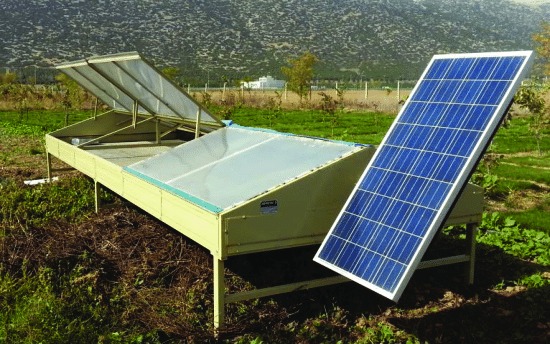
Built for efficiency and community impact.
Solar powered
Zero electricity cost — runs entirely on solar thermal energy, viable even in the most remote locations.
35% more nutrients
Controlled drying preserves vitamins and minerals far better than traditional open-air sun drying.
Portable design
Lightweight and mobile — processors run the dryer from home, enabling women-led micro-entrepreneurship.
Up to 12-month shelf life
Dried produce stays market-ready for up to a year, freeing farmers from the pressure of an immediate sale.
Second market route
Produce rejected for size, shape, or colour gets a new life as dried ingredients sold to processors and vendors.
Processor training
Local women are trained and certified in solar drying technology, building capability alongside income.
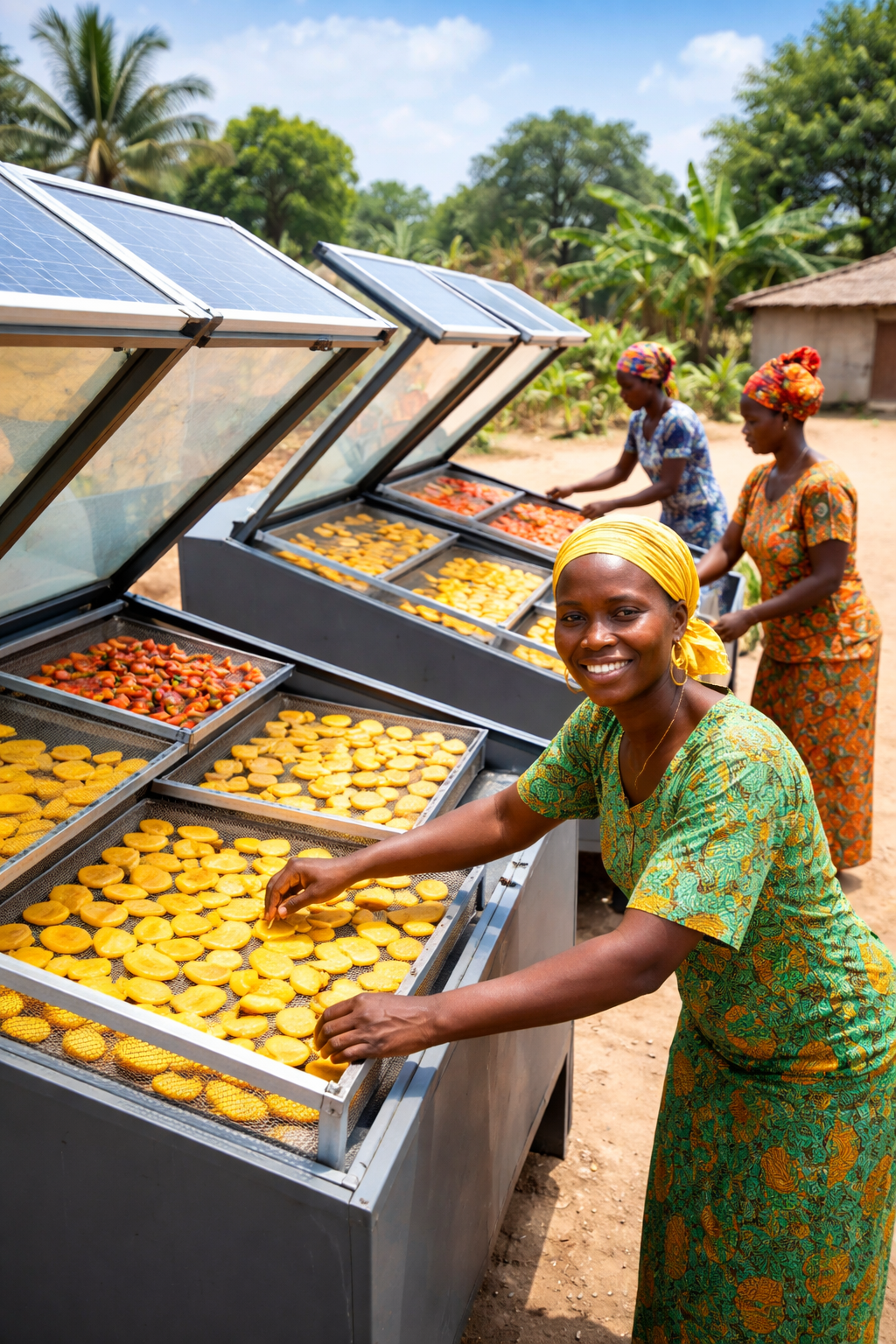
Women-led processing, real livelihoods.
The processors who turn crops into dried ingredients are local women, trained in solar drying technology. This isn't just about drying food — it's about creating a second, sustainable income.
"I used to earn barely enough as a farm labourer. Now I run my own drying business from home and my children are back in school."
Jane Akinyi, processor
From farm to table.
Source produce
Lower-grade produce is bought from smallholder farmers that would otherwise go to waste.
Women processors
Trained local women dry the produce using portable solar technology at their own homes.
Central packaging
Dried produce is collected, quality-checked, and packaged at the central processing facility.
Market access
Dried produce is sold to production companies, vendors, and food service providers.
Specifications.
Ready to preserve more and waste less?
Join the network of farmers and processors turning surplus produce into sustainable income.